Essential Roof Maintenance Tips for Columbia, MO Homeowners
Your roof endures everything Mid-Missouri throws at it: scorching summers, ice storms, severe thunderstorms, and everything in between. Regular maintenance is the single most effective way to extend your roof's lifespan, prevent costly repairs, and protect your home. Here is a comprehensive guide to keeping your Columbia, MO roof in peak condition throughout every season.
Why Roof Maintenance Matters in Missouri
Columbia, Missouri sits squarely in the heart of Tornado Alley and experiences wide temperature swings that stress roofing materials year after year. Summer highs routinely exceed 90 degrees, while winter lows can plummet below zero. That constant expansion and contraction cycle weakens shingles, loosens flashing, and degrades sealants faster than in milder climates. A proactive maintenance routine can add five to ten years to your roof's effective lifespan and save you thousands of dollars in avoidable repair costs.
Homeowners who schedule regular inspections catch small issues before they become big problems. A missing shingle replaced promptly costs a fraction of what interior water damage restoration would run. Maintaining your roof also preserves your home's value, keeps your energy bills in check, and ensures your insurance coverage remains valid.
Seasonal Roof Maintenance Checklist
Each season brings its own set of challenges for roofs in Central Missouri and the Mid-Missouri region. Following a seasonal checklist ensures nothing falls through the cracks.
Spring Maintenance Tasks:
- Inspect for winter damage - Look for cracked, curled, or missing shingles caused by ice, snow, and freeze-thaw cycles
- Clean gutters and downspouts - Remove leaves, twigs, and debris that accumulated over fall and winter
- Check flashing around penetrations - Examine seals around chimneys, vents, skylights, and satellite dishes
- Trim overhanging branches - Cut back any limbs within six feet of the roof surface to prevent abrasion and debris
Summer Maintenance Tasks:
- Inspect attic ventilation - Ensure soffit and ridge vents are clear to prevent heat buildup that bakes shingles from below
- Check for algae or moss growth - Missouri humidity promotes dark streaks and green patches that trap moisture
- Inspect after every major storm - Summer severe weather is common in Columbia, so check for hail dents and wind damage
Fall Maintenance Tasks:
- Clear leaves and debris - Accumulated leaves trap moisture and accelerate shingle decay
- Clean gutters again - This is the most critical gutter cleaning of the year before winter freezing begins
- Seal any gaps or cracks - Apply caulk or roofing sealant to minor gaps before temperatures drop
- Schedule a professional inspection - A fall inspection catches problems before winter makes them worse
Winter Maintenance Tasks:
- Monitor for ice dams - Watch for icicles forming at eaves, which indicate poor attic insulation or ventilation
- Check attic for condensation - Moisture buildup inside the attic signals ventilation problems that damage decking
- Remove heavy snow loads - If accumulation exceeds 12 inches, consider safe removal to reduce structural stress
How Often Should You Inspect Your Roof?
At a minimum, you should visually inspect your roof twice a year, once in spring and once in fall. However, living in Central Missouri means you should also inspect after any significant weather event, including hailstorms, high winds above 50 mph, heavy rain lasting more than 24 hours, and ice storms. Many types of damage are not visible from the ground, which is why scheduling a professional inspection at least once per year is highly recommended.
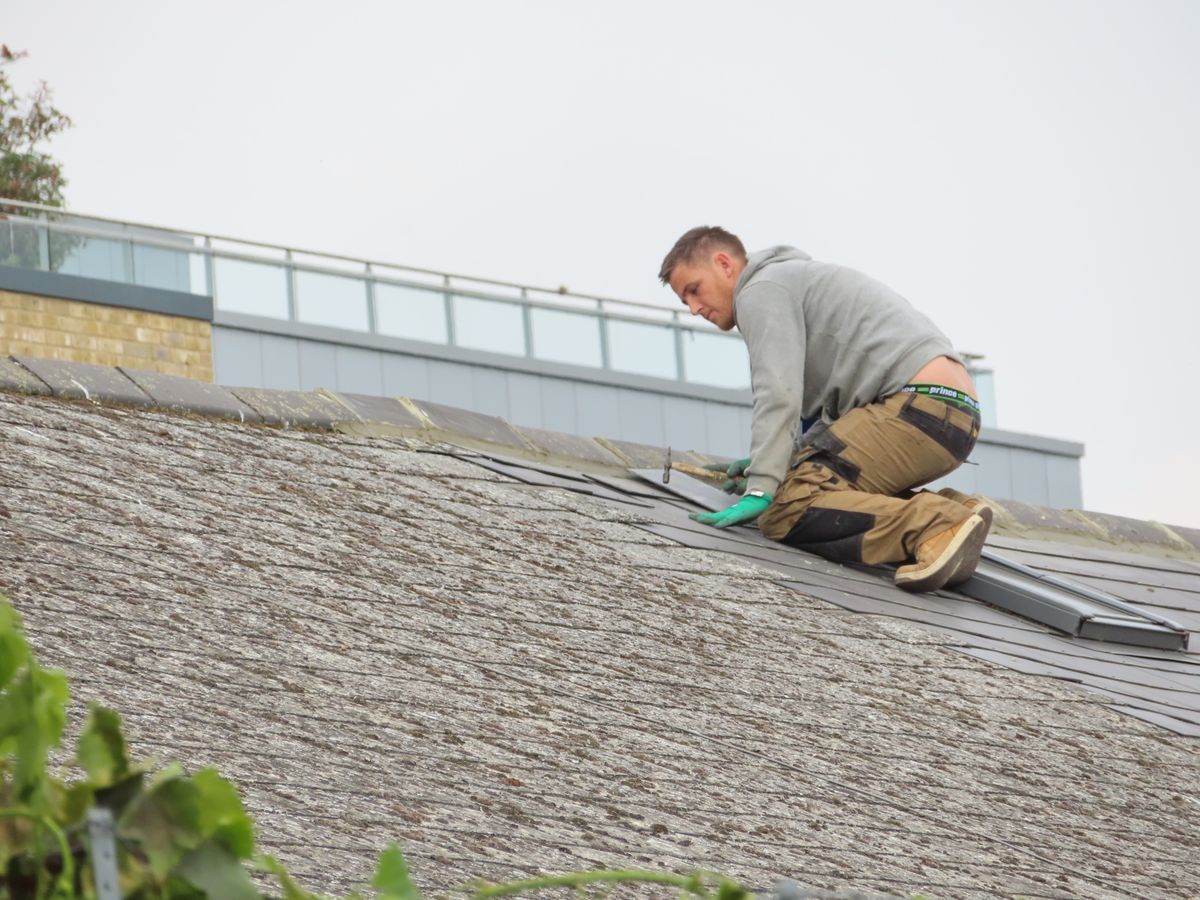
A professional roofer will get on the roof, check every flashing point, examine shingle condition up close, inspect the attic from inside, and provide a written report of their findings. JBS Roofers offers complimentary roof checks throughout Columbia, Boone County, and the surrounding Mid-Missouri area, so there is no reason to skip this important step.
Gutter Cleaning: Your Roof's Best Friend
Clogged gutters are one of the leading causes of premature roof failure. When water cannot drain properly, it backs up under shingles, seeps into fascia boards, and eventually causes rot in the roof decking. In Columbia, where fall brings heavy leaf drop from the area's abundant hardwood trees, gutters can fill up quickly.
- • Clean gutters at least twice per year, in late spring and late fall
- • Install gutter guards to reduce debris accumulation and maintenance frequency
- • Ensure downspouts direct water at least four feet away from your foundation
- • Check that gutters are firmly attached and have proper slope for drainage
- • Look for rust spots, cracks, or separated seams that allow leaks
Trimming Trees Near Your Roof
Overhanging tree branches pose multiple threats to your roof. During storms, they can break and puncture shingles or tear off sections of roofing entirely. Even on calm days, branches that rub against shingles gradually wear away the protective granule layer. Leaves and needles that fall from overhanging limbs accumulate in valleys and behind chimneys, trapping moisture and promoting decay.
Keep all branches trimmed back at least six feet from your roof surface. For large trees near your home, hire a certified arborist who can safely remove threatening limbs without damaging the tree or your property. In neighborhoods throughout Columbia and Mid-Missouri, mature trees are a valued part of the landscape, but they do require management to protect your roof investment.
Checking for Storm Damage
Missouri experiences an average of 50 to 60 severe thunderstorm days per year, along with frequent hail events. After any significant storm, perform a ground-level visual inspection of your roof.
Post-Storm Inspection Checklist:
- Scan the roofline - Look for missing or displaced shingles visible from the ground
- Examine gutters and downspouts - Check for dents that indicate hail size and impact force
- Inspect siding and window frames - Hail damage on these surfaces usually means roof damage too
- Check the attic - Look for any new daylight, water stains, or moisture on the underside of decking
- Document everything - Take dated photos for insurance purposes before making any temporary repairs
Ventilation: The Hidden Key to Roof Longevity
Proper attic ventilation is one of the most overlooked aspects of roof maintenance. Without adequate airflow, heat and moisture build up in your attic space. In summer, trapped heat can raise attic temperatures above 150 degrees, essentially baking your shingles from underneath and dramatically shortening their lifespan. In winter, warm moist air from your living space rises into the attic and condenses on cold roof decking, promoting mold growth and wood rot.
A balanced ventilation system includes intake vents at the soffits and exhaust vents at or near the ridge. Check that insulation has not been pushed against soffit vents, blocking airflow. Make sure bathroom and kitchen exhaust fans vent to the outside, not into the attic. If your attic feels noticeably hotter than outside air in summer or shows signs of condensation in winter, call a professional to evaluate your ventilation setup.
Pro Tips from the JBS Roofers Team
- • Keep a roof maintenance log noting inspection dates, findings, and any repairs performed
- • Never pressure wash asphalt shingles as this strips away protective granules
- • Address small repairs immediately because water damage spreads fast
- • Save receipts for all maintenance and repairs as they support insurance claims and add value at resale
- • If your roof is over 15 years old, increase inspection frequency to twice per year plus after every storm
- • Consider zinc or copper strips at the ridge to prevent algae and moss growth naturally
Related Services
Protect Your Roof with Professional Maintenance in Columbia MO and Mid-Missouri
JBS Roofers provides complimentary roof checks and expert maintenance services throughout Columbia, Missouri and the Mid-Missouri area. Our experienced team will identify potential problems early and help you keep your roof in top condition for years to come.